Hack Week

HUB2026

Hyperspectral Unmixing in Bahia

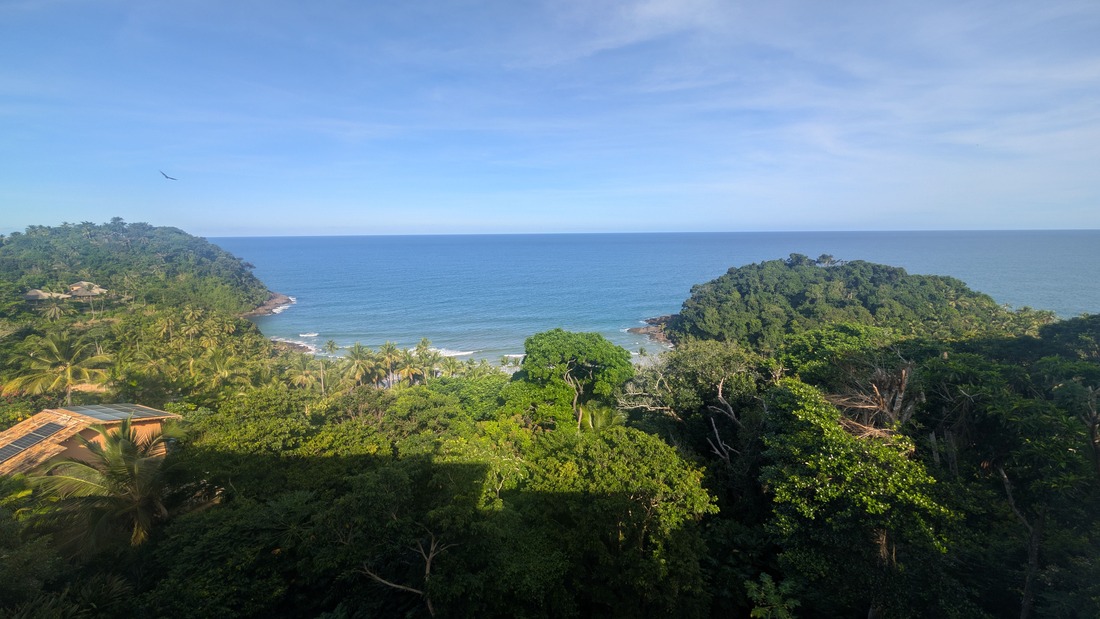
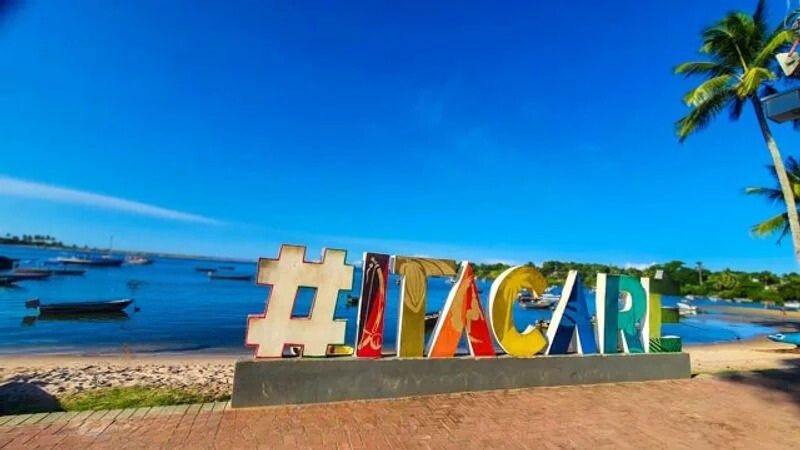
Itacaré, Bahia, Brazil

Deadline to apply: January 12th, 2026!

16th – 23rd March, 2026
Dias
Horas
Minutos
Itacare Bahia 2026

Rationale

Spectral, spatial, and hyperspectral data—whether obtained from astronomical observatories or from terrestrial and orbital remote-sensing platforms—encode intricate mixtures of physical signals, all shaped by noise, calibration uncertainties, and instrument-specific distortions. Across these domains, researchers rely on a wide range of analytical tools: from classical statistical inference and signal processing to modern machine-learning, geometric, and physics-informed methods.

Despite the diversity of applications: e.g. galaxy evolution, exoplanet atmospheres, environmental monitoring, precision agriculture, mineral mapping. The underlying challenges are remarkably similar, high-dimensional measurements, correlated noise, nonlinear mixing of sources, and the need for robust spatial–spectral modeling.

This common structure creates a natural bridge between astronomy, Earth observation, and applied data science. Techniques developed in one field (e.g., spectral unmixing, denoising, segmentation, dimensionality reduction, latent-space modeling, uncertainty quantification) often transfer seamlessly to the others.

Framing the problem space in this unified way provides a strong rationale for a cross-disciplinary hack week: a setting where participants from different backgrounds can exchange methods, compare workflows, and co-develop tools that generalize across spatial and hyperspectral datasets—regardless of whether the telescope is pointed outward toward galaxies or downward toward Earth.

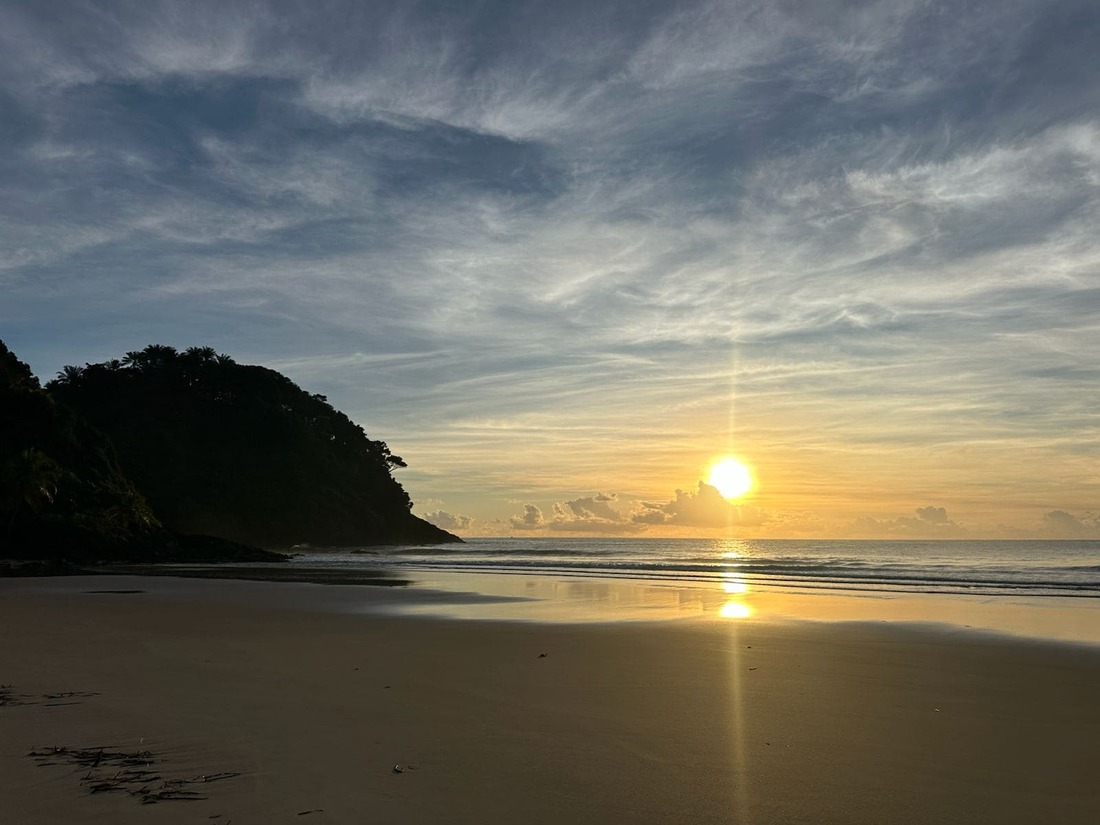
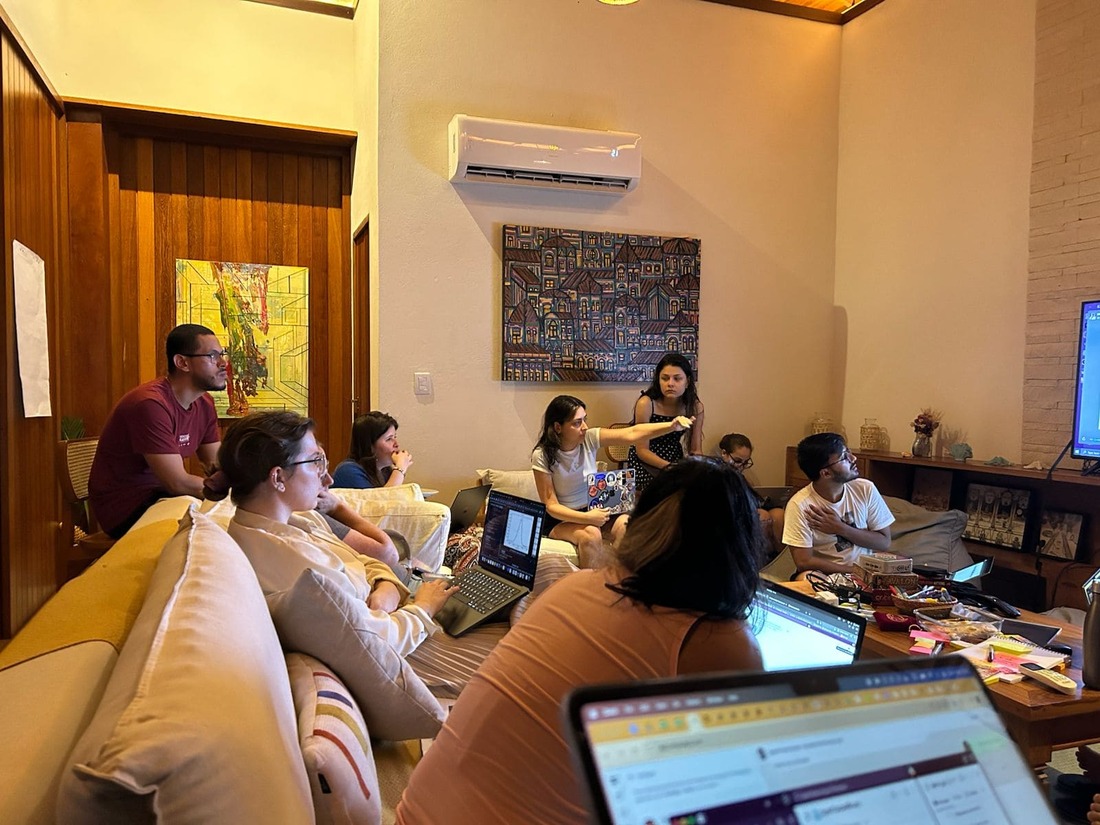
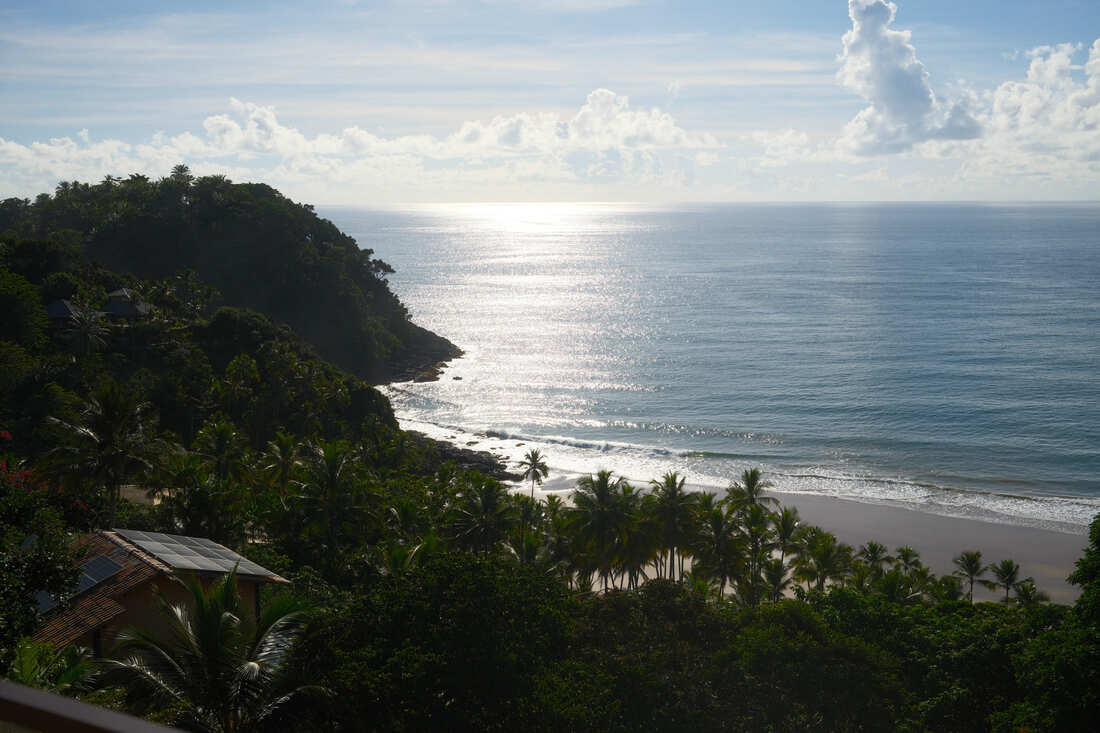
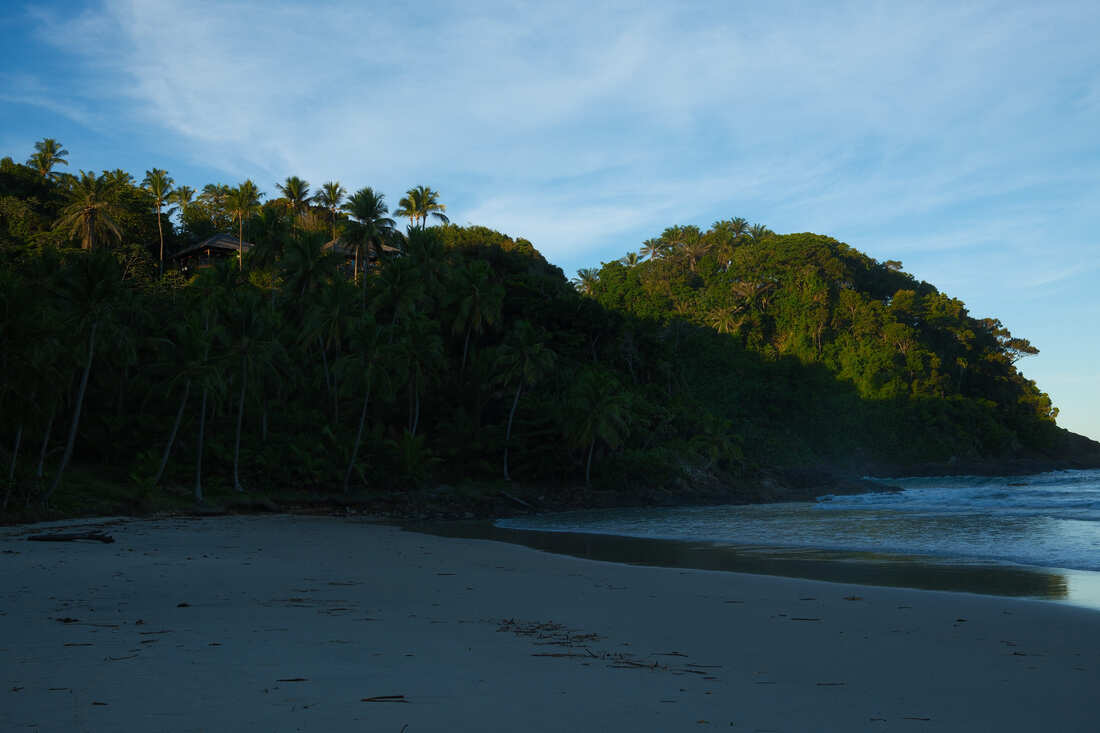
This hack week, held on the beaches of Itacaré in Bahia (Brazil), aims to bring together experts from diverse fields to prototype computational solutions inspired by—but not limited to—an astrophysical challenge: the extraction of point-source spectra embedded in noisy hyperspectral data, a problem central to Integral Field Spectroscopy.

One of the flagship projects will focus on disentangling the light of some of the oldest stellar systems known to humankind: the globular clusters. By tackling this problem in a cross-disciplinary setting, participants will explore techniques that generalize well beyond astronomy—into remote sensing, environmental monitoring, precision agriculture, materials science, and any domain working with spatial–spectral data affected by complex noise and source mixing.

Datasets from other fields are welcome! While we are open to any type of expertise participants may bring, we list below some examples of research topics we consider particularly synergistic with the goals of the hack week:

Signal Processing & Sparse Representations

  • Sparse coding
  • Dictionary learning
  • Wavelet and multiscale methods
  • Blind source separation (e.g., ICA, NMF)
  • Matrix factorization (linear and nonlinear)

Representation & Machine Learning Models

  • Representation learning
  • Autoencoders and variational models
  • Graph-based methods for spatial–spectral data

Bayesian Approaches

  • Bayesian hierarchical modeling
  • Simulation-based inference (SBI)
  • Uncertainty quantification
  • Probabilistic latent-variable models

Spatial–Spectral Modeling & Scientific Applications

  • Integral Field Spectroscopy methods
  • SED / spectral fitting
  • Point-source extraction and deblending
  • Stellar population synthesis and modeling
  • Remote sensing for environmental monitoring
  • Precision agriculture using hyperspectral imagery

Software Engineering & Computational Infrastructure

  • Functional programming principles for clean, composable data pipelines
  • High-performance computing: GPU/TPU acceleration, parallelization, vectorization
  • Modular and reproducible scientific software design

Location

Itacaré - Bahia

Deadline to apply: January 12th, 2026!
Check-in on Monday, 16th of March 2026 and check-out on Monday, 23rd of March 2026.
Organizers

HUB2026
Ana Chies Santos

UFRGS, Brazil

Caroline Foster

UNSW, Australia

Rafael S. de Souza

U, Hertfordshire, UK - UFRGS, Brazil - UNC, US

Application Form

Deadline to apply: January 12th, 2026!

1) Given its unique format, we are only able to accept a small number of applications for this workshop. The organizers will contact you about the result of your application shortly after the registration deadline.
 
2) The organization will cover accommodation (in a shared bedroom) for all participants.
 
3) Each participant is responsible to cover their own transportation costs and per diem.
 
4) The duration of the HUB2026 is of 7 days — check-in on Monday, 16th of March 2026 and check-out on Monday, 23rd of March 2026. Partial participation is not allowed. All participants are required to stay for the full duration of the meeting.
 
5) Remote participation is not possible.
 
6) Participants agree to enroll in preparatory online meetings previous to the realization of the HUB2026, as well as subsequent online meetings and tasks required to bring the work to publication standards.
 
7) The projects to be developed will be discussed and evaluated by the participants. Participants are required to contribute to whatever project is chosen by the group to the best of their abilities, regardless of their previous expertise.
 
8) Participation does not guarantee authorship in publications produced during this meeting. The author list is defined by the project lead, under advisement of the organizers, once the project is finalized.
 

9) All activities (scientific or social) will be conducted in English. Participants are advise to use English in all exchanges, which enables the construction of a friendly environment for everyone.

Registration deadline is 12 Jan 2026

Code of Conduct

HUB2026 is composed of members from around the globe with a diverse set of skills, personalities, and experiences.

We require participants to follow these guidelines which help steer our interactions and strive to have an enlightening experience for all members involved.
The official language of HUB2026 is English.

Important

HUB2026 will be a harassment-free environment for everyone, regardless of gender, sexual orientation, disability, physical appearance, body size, race, nationality or religion.

Please bring any issues to the confidential attention of the workshop organizers.

Be receptive to constructive comment and criticism, as the experiences and skill sets of other members contribute to the whole of our efforts.

Be thoughtful when addressing the efforts of others, keeping in mind that often times the labour was completed simply for the good of the group.

Be good and respectful to each other.

Given the informal nature of the program, be perceptive about eventual help needed in the organization and maintenance of the household tasks.

HUB2026 is a strictly non-smoking event. Smoking is not allowed anywhere inside the venue or around the pool area.

Participants sharing a room should pay attention to tidiness, personal hygiene, sleeping hours and noise. In the common areas, there is no time limit and you can keep working through the night, if you wish to.

The mere participation does not guarantee authorship in HUB2026 papers.

Publications developed during the HUB2026 are led by volunteer participants who commit to the implementation of all stages of the project during and after the meeting.

All participants who contribute to development of a project will be included in the author list. The order of the authors is decided by the project leader, in common agreement with the co-chairs, once the paper is finalized.

Reference

Sponsors

CNPQ
UNSW Australia
SCHEDULE DETAILS

INFORMATION OF EVENT SCHEDULE !

Quam amet tristique adipisicing incididunt arcu, excepturi molestie turpis deserunt ducimus malesuada minus mauris veniam.

From 9:30 to 11:30
BUSINESS LECTURE
BUSINESS MANAGEMENT INFO

Quam amet tristique adipisicing incididunt arcu, excepturi molestie turpis deserunt ducimus malesuada minus mauris veniam.

From 12:00 to 01:30
MARKET WORKSHOP
DIGITAL MARKETING WORKSHOP

Quam amet tristique adipisicing incididunt arcu, excepturi molestie turpis deserunt ducimus malesuada minus mauris veniam.

From 3:00 to 04:00
TEAM WORKSHOP
CULTURE OF CREATIVITY

Quam amet tristique adipisicing incididunt arcu, excepturi molestie turpis deserunt ducimus malesuada minus mauris veniam.

From 4:30 to 06:00
MARKETING THEORY
BEST MARKETING STRATEGIES

Quam amet tristique adipisicing incididunt arcu, excepturi molestie turpis deserunt ducimus malesuada minus mauris veniam.

I’m an Astronomy PhD researcher working at the Interdisciplinary Center for Scientific Computing and Institute of Theoretical Astrophysics, both in Heidelberg, Germany. I obtained my BSc and MSc in Physics from the University of Stuttgart in Germany.

https://anschaible.github.io/

I obtained my Ph.D. in astrophysics in 2024 at the Universidade Federal do Rio Grande do Sul (UFRGS, Brazil), including a six-month split-site period at Stockholm University. I am currently a postdoctoral researcher at the Istituto Nazionale di Astrofisica (INAF), Osservatorio Astronomico di Padova, Italy. My research focuses on extragalactic astronomy, with particular interest in galaxy formation and evolution, the physical and chemical properties and dynamics of ionized gas, and the role of dense environments in driving galaxy evolution and shaping their morphologies.

https://augustolassen.github.io/personal_webpage/

I am currently pursuing a Bachelor’s degree in Computer Science at the Federal University of Rio Grande do Sul (UFRGS), while serving as an Undergraduate Research Fellow in the Department of Astrophysics. Previously, I completed a technical degree in Information Technology at the Federal Institute of Education, Science and Technology (IFSUL). My research focuses on developing automated pipelines for the analysis of astronomical imaging data, with an emphasis on applying software engineering practices to astronomical studies.

www.linkedin.com/in/brunarblima

Originally from Donostia – San Sebastián, Basque Country. Cecilia is a PhD candidate in Astrophysics at the Università degli Studi di Napoli Federico II in Naples, Italy. Her research focuses on the detection of three-dimensional structures in datacubes, currently using ALMA data. Cecilia completed her undergraduate degree in Physics and later pursued a master’s degree in Astrophysics at the University of La Laguna in Tenerife.

Personal web: https://ceciliaadc.github.io/Ceci-page/index.html
LinkedIn: https://www.linkedin.com/in/cecilia-arrizabalaga-díaz-caneja

I am a Swedish PhD student in the Galaxy group at Stockholm University. My work consists of using integral field unit data from VLT/MUSE to study Lyman continuum leaking galaxies at low redshift. Such galaxies are local analogs to reionization era galaxies, from which the Lyman continuum radiation needed to reionize the universe might have escaped. I got my Masters degree in 2024 from Uppsala University in Sweden. For my Masters thesis I simulated spectroscopic observations of gravitationally lensed stars at high redshift.

https://www.su.se/profiles/e/emlu6085

Has recently completed his PhD in astrophysics, working primarily with integral-field spectroscopy of galaxies. He has experience with large IFS datasets, particularly from MUSE, as well as with survey data from SDSS. His research combines stellar population analysis (including kinematics and star formation history recovery) with detailed studies of the ionised interstellar medium.
He is a member of the GECKOS survey, contributing to the development of the nGIST pipeline for IFS analysis, and co-leading a research project focused on galaxy vertical structures and gas flows. He is also an associate member of the TIMER survey, based on MUSE observations, where he works on emission-line measurements from IFS data and leads efforts to model the ionised gas using multiple Gaussian components.

https://orcid.org/0000-0003-3490-9063

I am a PhD student at UFRGS, Porto Alegre with a strong interest in extragalactic globular clusters and galaxy evolution. My research focuses on the analysis of spectroscopic and photometric data to understand the formation, evolution, and physical properties of cosmic structures.

www.linkedin.com/in/niranjana-p

Pratyush Kumar Das is a PhD candidate at The University of Queensland (Brisbane, Australia) working on galaxy kinematics and structure to build scalable pipelines for spatially resolved galaxy measurements using large integral-field spectroscopy surveys and cosmological simulations. He works extensively with Python and R based data analysis, Bayesian/MCMC inference, and high-performance computing workflows, and has experience in machine-learning approaches for mapping baryonic galaxy properties onto dark-matter haloes to enable fast forward models for upcoming surveys.

www.linkedin.com/in/pratyush-kumar-das-a517311a1
https://orcid.org/0000-0002-4326-8598

My name is Sadaf Aliakbarzaseh, and I am a PhD student at the University of New South Wales in Sydney, Australia. I work on extragalactic Globular Clusters around Milky Way-like galaxies under the supervision of Caroline Foster.

www.linkedin.com/in/sadaf-aliakbar-zadeh-311b39260

My research focuses on the development and application of advanced statistical methodologies to infer robust physical properties from incomplete, noisy, or intrinsically degenerate astronomical observational data. In particular, I employ supervised, unsupervised, semi-supervised, and probabilistic machine-learning techniques as tools to overcome classical observational limitations and to revalorize low- to medium-cost datasets, achieving results comparable to those obtained through more demanding observational techniques. I work with diverse data types—including time series, imaging, tabular, and spectroscopic data—covering the full data-analysis pipeline, from data curation, homogenization, and preprocessing to feature extraction, statistical modeling, and physical interpretation. This comprehensive approach allows me to directly connect computational methods with concrete astrophysical questions. Throughout my career, I have gained extensive experience in the automation of observational tasks, the handling of both observational and simulated data, the integration of multiple data sources, and the use of several programming languages (PyTorch, Python, Fortran, Julia, among others), as well as in scientific visualization and interdisciplinary collaboration. My work lies at the intersection of observational astronomy, statistical inference, and data science, while maintaining a strong connection to projects with significant social impact

Dr. Vasiliki Fragkou is a postdoctoral researcher at the Valongo Observatory of the Federal University of Rio de Janeiro and her main research interests include late-stage stellar evolution and stellar populations. Dr Fragkou completed her undergraduate studies in Physics at the Aristotle University of Thessaloniki, during which she also participated in an exchange program at the University of La Laguna. She holds a Master of Science by Research in Astronomy and Astrophysics from the University of Manchester, a PhD in Astronomy from the University of Hong Kong, and has also completed a two-year postdoctoral research fellowship at the Institute of Astronomy, Ensenada branch, of the National Autonomous University of Mexico.

https://orcid.org/0000-0002-8634-4204